Common Digital Signage Content Mistakes to Avoid
Digital signage is a useful tool for businesses to inform and engage different audiences. From promotions and menus to alerts and announcements, digital displays can communicate a wide range of information to customers.
However, not every business knows how to optimize digital signage content for better engagement, relevance, and performance. Businesses may also struggle to separate critical information from less important details or display content that is not relevant to their audience. These mistakes can waste time and resources.
Below are some common digital signage content mistakes businesses should avoid to improve their on-screen communication.
1. Too Much Information
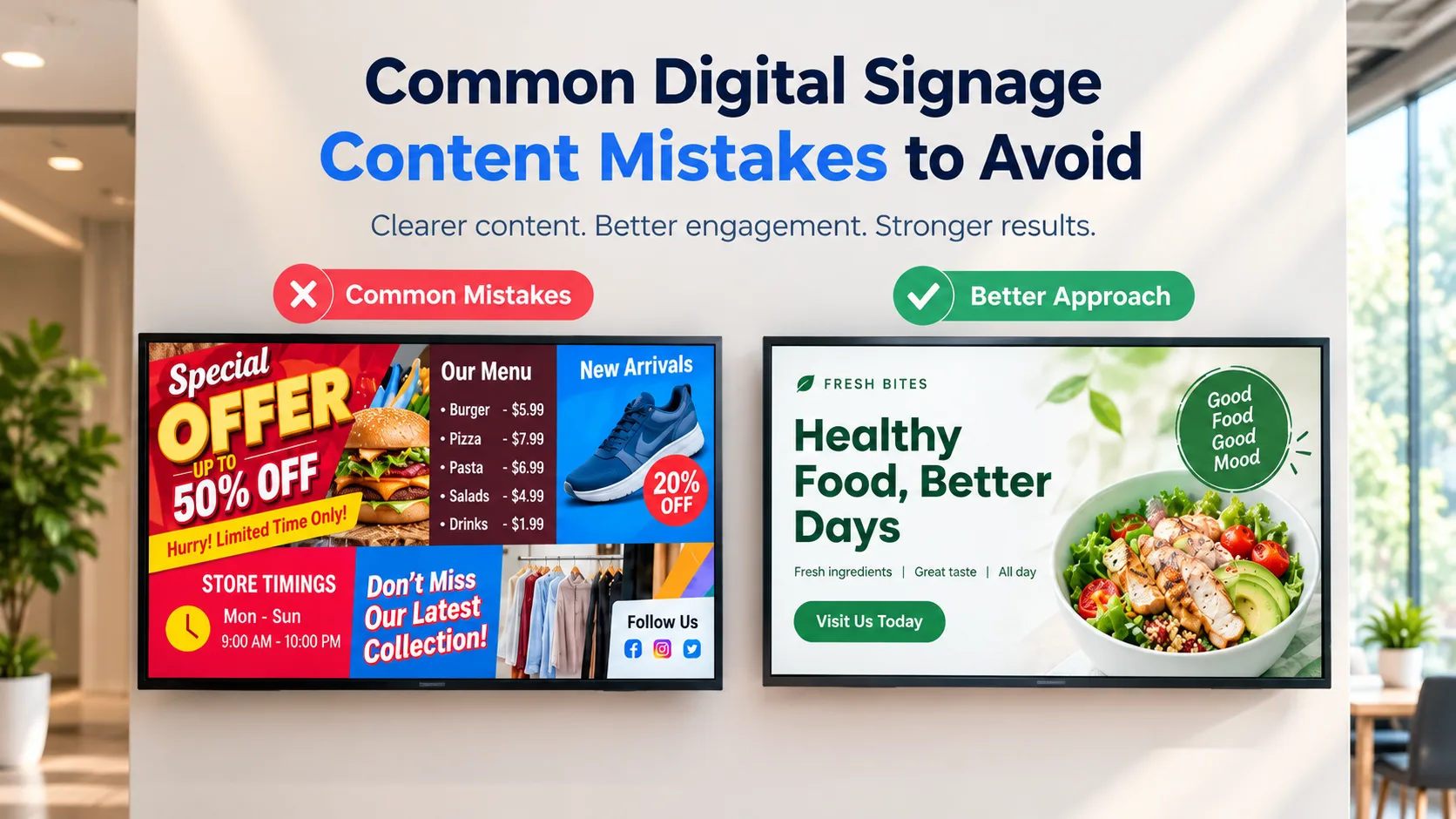
Relevance is key to effective digital signage. Providing too much information can make screens difficult to read and understand, especially when viewers only have a few seconds to look at them.
Important and less important information should be clearly separated. Use short headlines, supporting text, and suitable images or videos to communicate the message. Prioritize the most relevant information so viewers can understand it quickly.
Small text and low-quality fonts can also reduce readability. Since screens may be viewed from a distance, text should be large enough to read comfortably.
Use clear fonts and strong contrast for headlines and key phrases. Supporting information can be smaller, but it should still be easy to read.
2. Targeting the Wrong Audience
Content that works well in a convenience store may not be suitable for an office building, restaurant, or hospital. Businesses make this mistake when they overlook the screen's location and the people who will see it.
For example, not every customer or employee will be interested in promotional offers. Such messages should be displayed where they are relevant and useful to the intended audience.
Before creating content, consider who will see it, what information they need, and where the screen is placed.
3. Displaying Outdated Content
One common digital signage mistake is displaying old or irrelevant information when updated content is needed. Outdated prices, expired promotions, incorrect operating hours, and old announcements can confuse customers and employees.
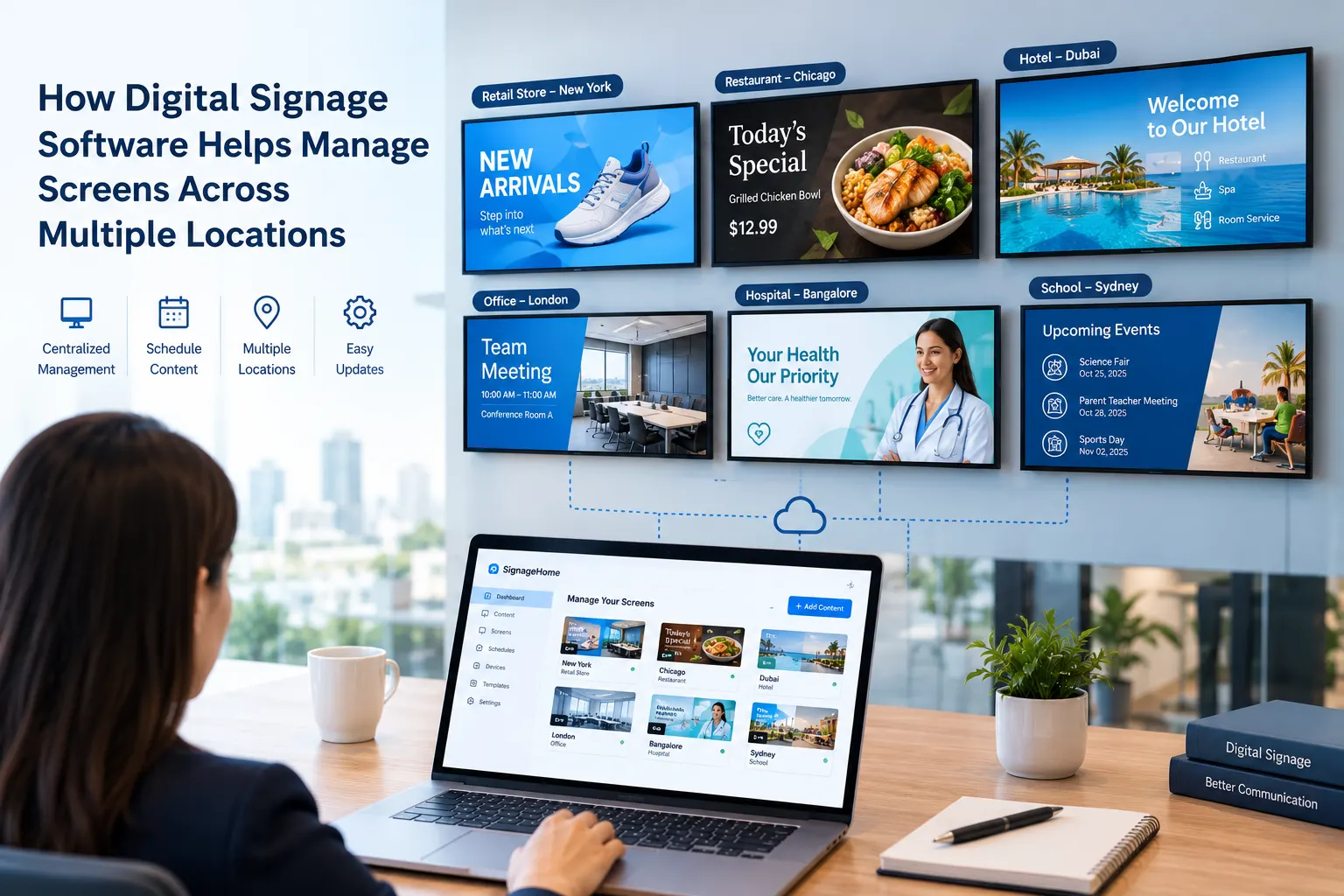
Managing content becomes more challenging when a business operates multiple screens across different locations. Without a clear process, it can be difficult to track which information appears on each display.
Review screen content regularly and replace expired information with current details. Businesses using a digital signage solution such as Signage Home can also explore ways to organize content and manage their screens more efficiently.
4. Poor Screen Presentation
Having the right information is only part of effective digital signage. Content must also be presented in a way that viewers can easily understand.
Crowded screens, excessive text, too many colours, and headlines in inconsistent sizes can make the message difficult to follow.
Keep headlines prominent and readable, with supporting information in a smaller size. Use colours and layouts that match the brand's visual identity. Leave enough space between text and images to keep the screen organized and easy to view.
5. Low-Quality Images and Videos
Stretched images, blurry visuals, and videos with incorrect dimensions can make business displays look unprofessional. Important details may also become difficult to see when media files do not fit the screen properly.
Using suitable, high-quality media can improve the overall presentation. Before publishing, check the image resolution, video dimensions, text placement, and screen orientation.
Make sure images and videos support the message rather than overpowering it. Essential information should remain visible and easy to understand.
6. Repeating the Same Content Too Often
Repetition can help people remember information, but showing the same content continuously may cause viewers to lose interest. When a display never changes, people may begin to ignore it.
A better approach is to create a balanced content playlist with different messages and clear priorities. Businesses can rotate relevant promotions, announcements, menus, and other useful information throughout the day.
Content should be planned according to the audience, location, and purpose of each screen. Avoid adding unnecessary material simply to keep the display occupied.
7. Skipping the Content Review Process
Even carefully prepared content can contain mistakes. Incorrect prices or dates, spelling errors, and the wrong image or video file can reduce the impact of a digital signage campaign.
It is also important to check whether headlines are prominent, colours are easy to distinguish, and the overall layout is clear.
Before publishing, review the content for accuracy, readability, and visual consistency. After publication, confirm that the correct content appears on the intended screen and that all media files display properly.
8. Ignoring Content Performance
Without reviewing how content performs, businesses may find it difficult to determine whether their messages are effective. A design that looks impressive on a computer may not deliver the intended results when displayed to customers.
The right approach to content analysis depends on the business and the tools available. Companies can review relevant indicators such as customer feedback, promotion-related sales, QR code visits, or campaign responses.
The measurements should match the original goal. For example, a campaign designed to increase awareness may require different indicators from one intended to promote a particular product.
9. Inconsistent Content Across Different Locations
Businesses with multiple locations may face problems when their displays show inconsistent messages. Even when the information is correct at each location, differences in branding, promotions, or pricing can confuse customers and weaken brand consistency.
To avoid this, establish clear brand guidelines, including colours, fonts, layouts, and messaging. Set up a reliable process for reviewing and updating content across locations.
Choosing suitable digital signage management tools can also help teams coordinate updates and maintain consistency across different screens.
Final Thoughts
Digital signage can help businesses improve communication and engage customers, but its effectiveness depends on the quality and relevance of the content.
Before publishing, make sure the message suits the target audience, provides useful information, and displays correctly on the intended screens. Avoid outdated content, poor-quality media, overcrowded layouts, and inconsistent messaging.
A simple review process and regular content updates can help businesses make their digital signage clearer, more relevant, and more effective.