How Digital Signage Supports Brand Communication
Brand communication is an important part of how a company connects with its customers. From colours and graphics to the messages it shares, every element contributes to the image a business wants to create. Digital signage allows businesses to use digital displays to communicate with their audiences in a clear and engaging way.
By combining a consistent brand communication strategy with relevant content, businesses can build brand recognition and create meaningful connections with customers.
What Is Brand Communication in Digital Signage?
Brand communication includes the different ways a company shares its values, identity, and information about its products or services with its audience. Digital signage supports this process through advertisements, videos, text, images, company announcements, and other visual content.
Businesses can use screens to display promotional messages, product information, organisational news, welcome messages, and announcements for employees and customers. The content can be adapted according to the audience, location, and purpose of each display.
1. Maintaining Brand Consistency
Many businesses operate across multiple locations and serve a wide range of customers. In such cases, maintaining a consistent brand identity is important for building recognition and trust.
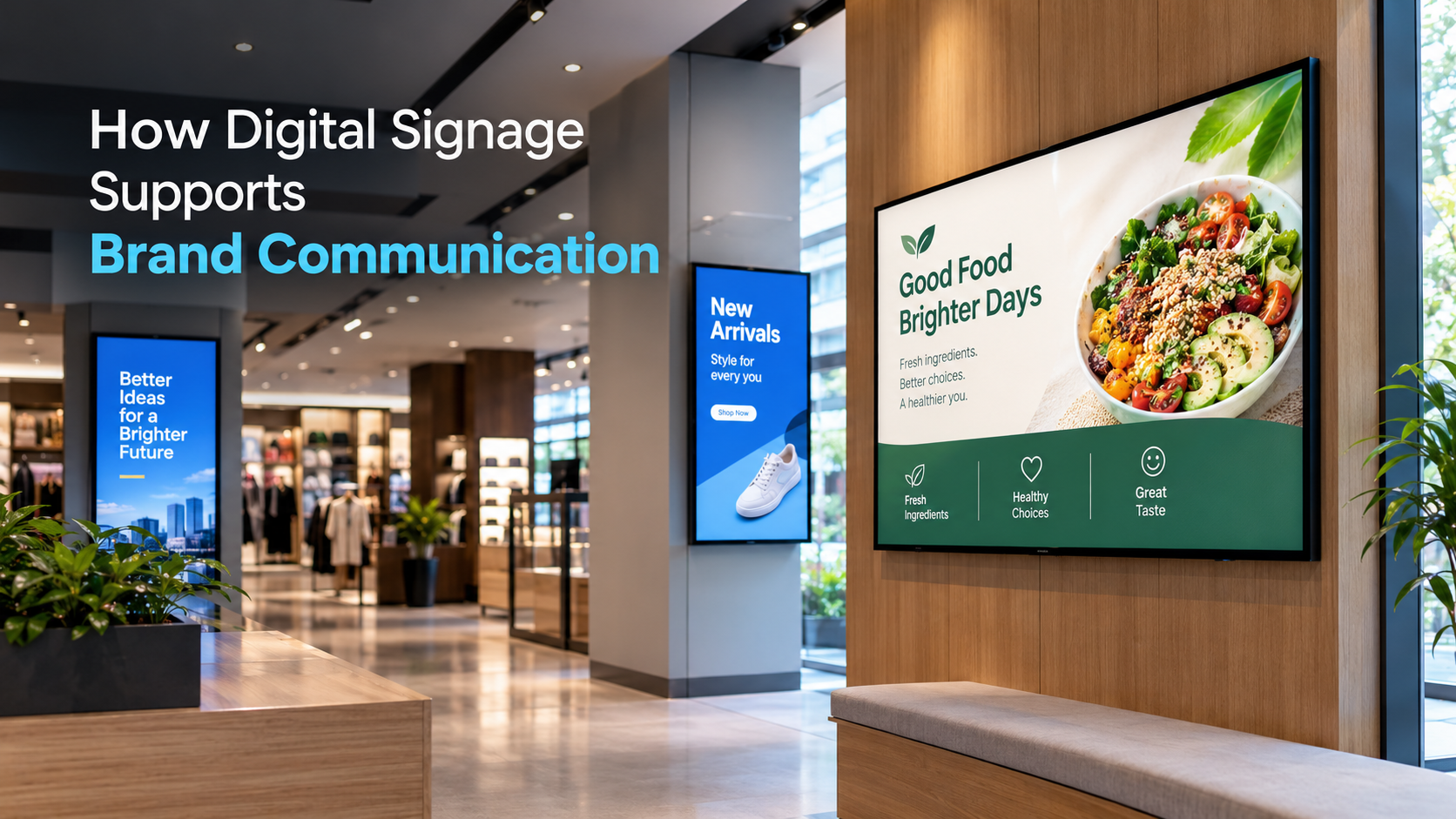
Digital signage helps businesses display consistent brand elements across their screens, including logos, colours, images, and messaging. Maintaining a similar look and feel across locations reinforces the brand's visual identity and helps customers recognise it more easily.
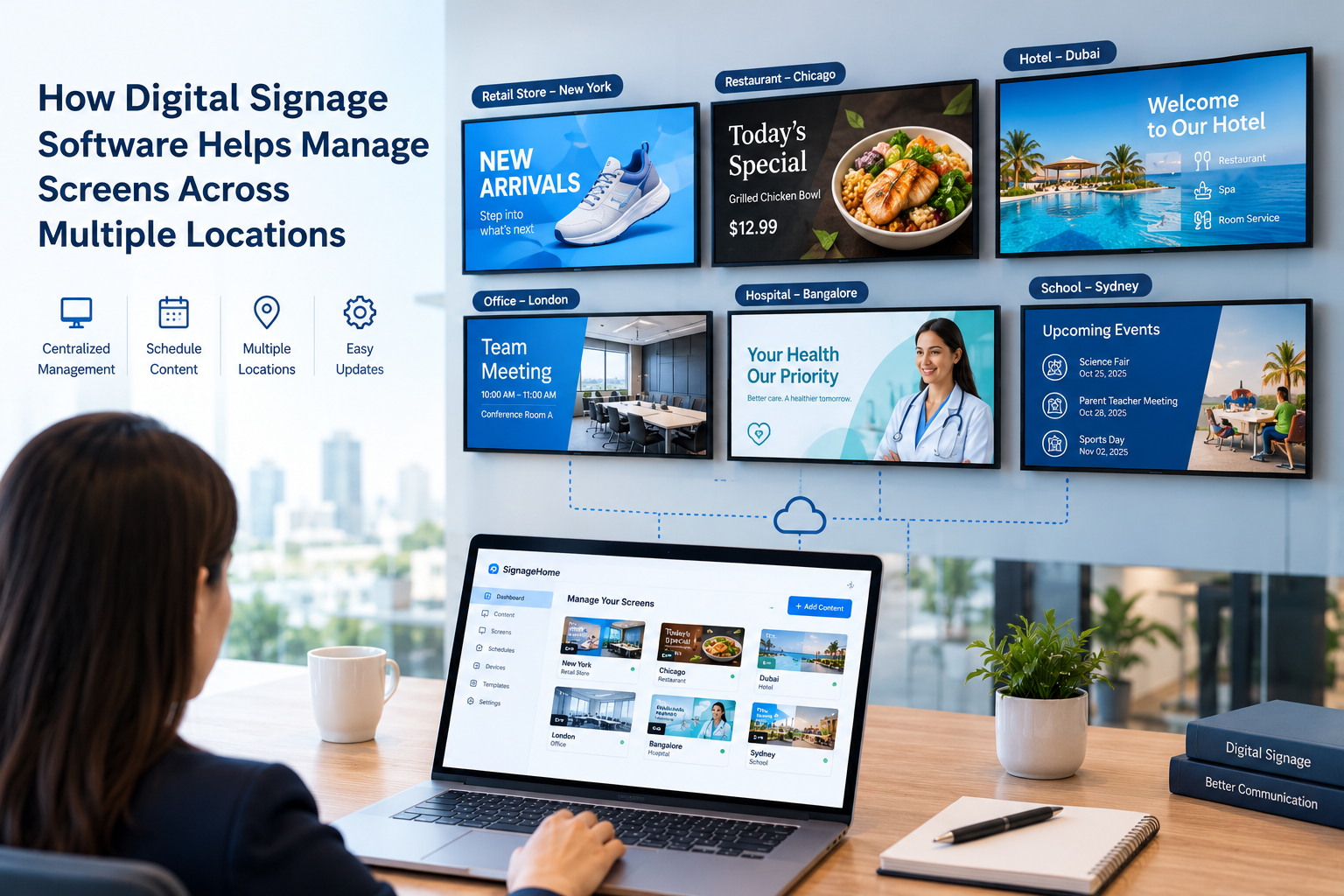
A centralised digital signage content management system can also help organisations coordinate updates and manage content across multiple locations.
2. Making Brand Messages More Visual
Digital displays allow businesses to present brand messages through visual content. Images, videos, headlines, and product highlights can help communicate information in a format that is easy for audiences to understand.
For example, retail businesses can use screens to showcase new products and seasonal promotions, while restaurants can highlight menu items and current offers. Relevant and visually appealing content helps businesses communicate key information without overwhelming viewers with too much text.
3. Sharing Timely Brand Updates
Promotions, product launches, and brand announcements often change over time. Updating printed materials can require additional time and resources, particularly when a business operates across several locations.
Digital signage software can help businesses schedule content updates for specific dates and times, depending on the platform's features. This makes it easier to keep promotional messages current and coordinate brand communication across connected displays.
4. Supporting Communication Across Multiple Locations
Managing consistent communication across several locations can be challenging, especially when different teams are responsible for their own displays. Multi-location digital signage helps businesses coordinate content through a shared management system.
Businesses can maintain common brand guidelines while adapting messages to suit individual locations and audiences where needed. This approach can be useful for retail chains, restaurants, hospitality businesses, and corporate offices.
5. Creating Relevant Customer Experiences
The content displayed on digital screens can serve different purposes depending on the location and audience.
For example, retail customers may benefit from product information and special offers, while employees in a corporate office may need company announcements and workplace updates. By planning content according to the audience, location, and purpose of each screen, businesses can make their communication more relevant and useful.
Where Can Businesses Use Digital Signage for Brand Communication?
Retail stores: Communicate brand values, showcase product launches, and display special offers and seasonal promotions.
Restaurants and cafes: Present menu information, highlight special offers, and promote food and beverage products.
Corporate offices: Share organisational announcements, company updates, and brand messages within the workplace.
Hotels and hospitality: Display guest information, upcoming events, hotel services, and relevant offers.
Healthcare facilities: Share visitor guidelines, directions, service information, and other relevant announcements.
Best Practices for Digital Signage Brand Communication
Businesses can improve their brand communication strategy by following a few practical guidelines:
- Maintain consistent colours, logos, typography, and visual elements across displays.
- Keep headlines short and informative, with the main message easy to identify.
- Use high-quality images that suit the screen size and resolution.
- Review content regularly and remove outdated or irrelevant information.
- Schedule content according to campaign dates and communication goals.
- Check displays periodically to ensure the intended content is showing correctly.
Digital signage content should also suit the target audience, location, and viewing distance. A clear, focused message is often more effective than a screen crowded with information.
How Digital Signage Software Helps Manage Brand Content
Managing content across multiple displays can become difficult when updates are handled separately. A centralised system can support content management, scheduling, and screen organisation, depending on the platform's capabilities.
Businesses exploring digital signage solutions can learn more about SignageHome, a cloud-based digital signage platform for managing content across business displays.
Conclusion
Digital signage helps businesses communicate their brand messages through consistent visuals, relevant content, and timely updates across multiple displays and locations. It provides a practical way to share information with customers, employees, and visitors in different environments.
By combining a clear communication strategy with effective content planning and management, businesses can strengthen brand recognition and support their wider marketing efforts.