Digital Menu Boards: What Restaurants Need to Know
Digital menu boards offer restaurants, cafés, fast-food outlets, and other food businesses a flexible way to display menu items, prices, product images, nutritional information, and special offers.
But what exactly are digital menu boards, and what should restaurants consider before using them? From updating prices to managing promotions across multiple locations, understanding how digital menu boards work can help businesses make informed decisions about their display setup.
What Are Digital Menu Boards?
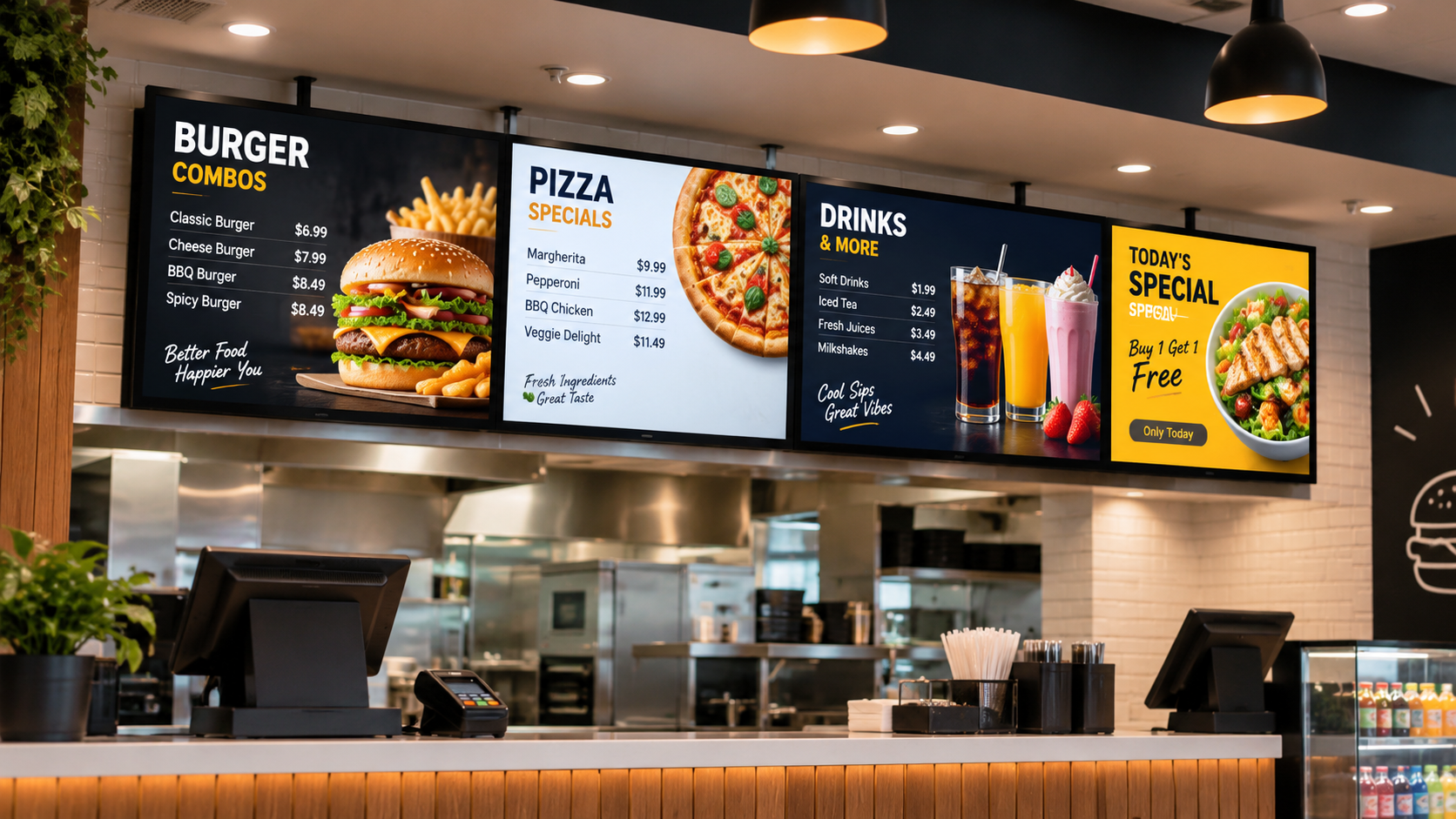
Digital menu boards are electronic screens used to display restaurant menus and related information. They can show food and beverage options, prices, promotional offers, and other details that help customers explore the menu.
Depending on the digital signage software and hardware, restaurants can manage content through a centralized dashboard, update multiple compatible screens, or control individual displays. This gives businesses more flexibility when managing menus and communicating changes.
What Are the Benefits of Digital Menu Boards for Restaurants?
1. Update Prices and Promotions Easily
With digital signage software, restaurants can update prices and promotions without printing new menus or posters. This makes it easier to keep menu information current and introduce seasonal offers, combo meals, and featured items.
2. Present Menu Items More Effectively
Images, videos, and well-organized layouts can make menu items easier to explore. Restaurants can highlight selected dishes, organize products into categories, and present relevant information in a clear visual format.
3. Highlight Special Offers and Seasonal Items
Digital menu boards can be used to feature limited-time offers, seasonal products, and special meal combinations. With scheduling features, restaurants can plan when specific content appears, depending on the capabilities of their digital signage platform.
For example, a restaurant may schedule breakfast promotions for the morning and display a different menu or set of offers later in the day.
4. Manage Menu Boards Across Multiple Locations
Restaurants operating across multiple locations may need to update menus on several screens. Centralized digital signage management can help teams coordinate content across compatible displays while allowing location-specific changes where required.
This approach can simplify menu management for businesses with several outlets, different display areas, or separate promotional requirements.
What Should Restaurants Consider Before Choosing Digital Menu Boards?
Choose the Right Screen Size and Placement
Screen size and placement should suit the restaurant's layout, viewing distance, and available space. A menu board behind a counter should be easy to see for customers waiting in line. Consider lighting, viewing angles, reflections, and the distance between the screen and the audience.
Text should be large enough to read comfortably, and important information should remain visible without requiring customers to strain their eyes.
Make the Menu Easy to Read
A digital menu should help customers find items and prices quickly. Use readable fonts, sufficient colour contrast, clear headings, and a logical structure. Keep essential details prominent and avoid overcrowding the screen with too much text or too many images.
A consistent layout also makes it easier for customers to navigate the menu and compare available options.
Use High-Quality Product Images
Clear, relevant product images can help draw attention to selected menu items. Restaurants should use good-quality photographs that accurately represent the food and beverages being offered.
Avoid unnecessary images or inconsistent visual styles that make the display look cluttered. A balanced combination of images, prices, and descriptions can keep the menu attractive while preserving readability.
Plan Menu and Content Updates
Restaurants should establish a clear process for updating digital menu content. Prices, item availability, and promotional details need to be reviewed before changes are published.
A content update process can help staff manage price changes, remove unavailable items, and ensure that promotions do not remain on screen after they have ended. Regular checks also help maintain accurate and consistent information across displays.
Choose Software That Fits Your Requirements
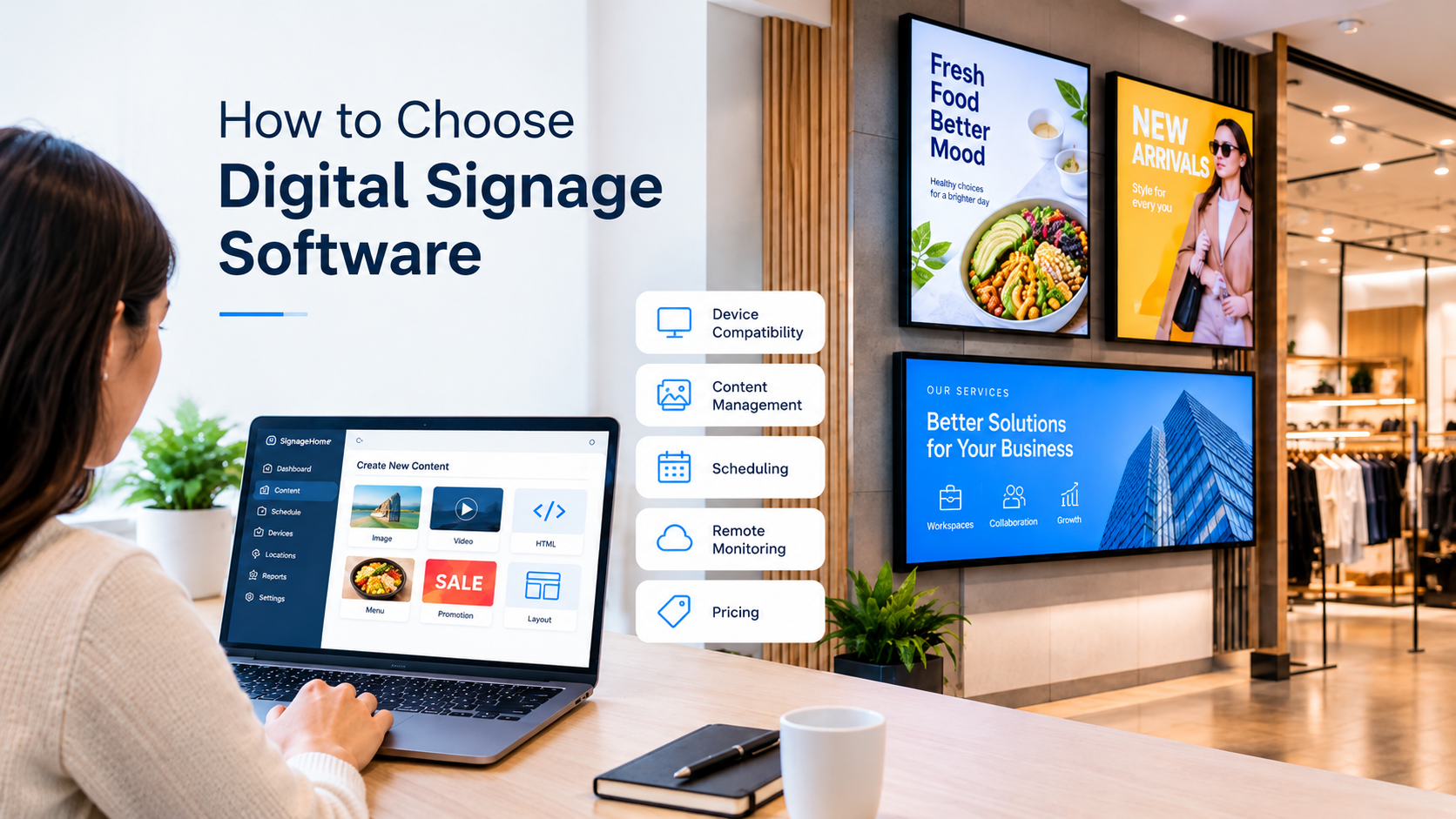
Before selecting digital signage software, restaurants should check hardware compatibility and the features available for content management. Useful capabilities may include content scheduling, customizable templates, centralized screen management, and device monitoring.
Businesses managing several screens should also consider whether they can update displays together, make location-specific changes, and provide appropriate access to staff members.
Digital Menu Board Best Practices
- Group similar food items, meals, and beverages into clear categories.
- Maintain consistent fonts, colours, spacing, and image styles.
- Make prices and essential menu information easy to read.
- Highlight relevant promotions without overcrowding the screen.
- Schedule content according to operating hours and menu availability.
- Review promotional content and remove expired offers promptly.
- Check that screens display the correct content and remain readable from the intended viewing distance.
How Can SignageHome Help Manage Digital Menu Boards?
SignageHome is a digital signage software platform that helps businesses create, customize, schedule, and manage content through a centralized web portal.
Restaurants can use digital signage templates to prepare menu displays and organize content for compatible screens. Scheduling features can help businesses plan when content appears, while centralized management can support the coordination of displays across multiple locations.
The right setup depends on a restaurant's hardware, content requirements, and operational needs. Reviewing these factors can help businesses determine how digital signage software fits into their menu management process.
Final Thoughts
Digital menu boards provide restaurants with a flexible way to display menus, update prices, and communicate promotions. However, effective results depend on more than installing screens. Readable design, accurate information, suitable placement, and a consistent content management process are all important.
By planning their display setup carefully and choosing software that meets their requirements, restaurants can make digital menu management more organized and adaptable to changing business needs.
To explore digital signage solutions for your business, visit SignageHome or get started with SignageHome.