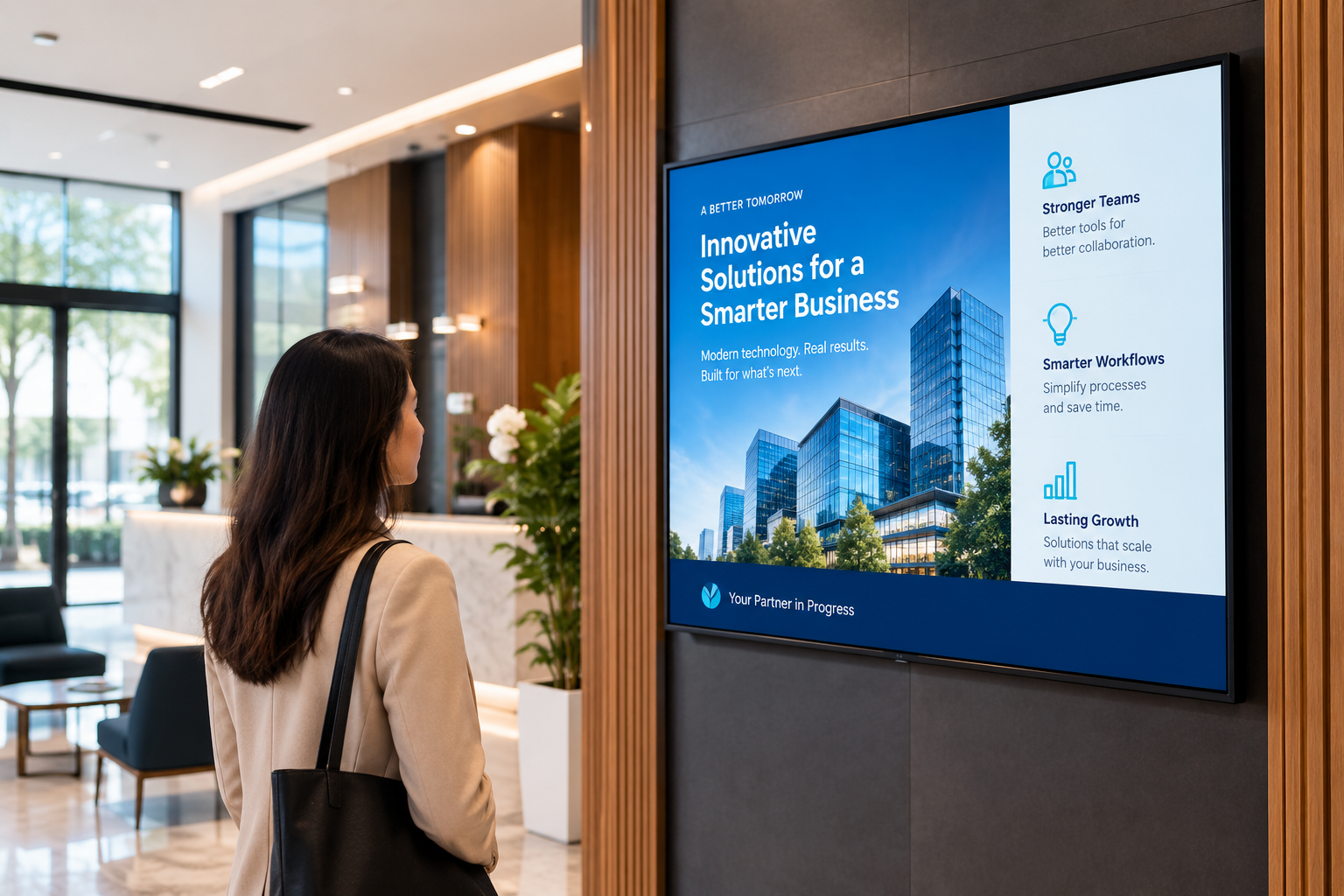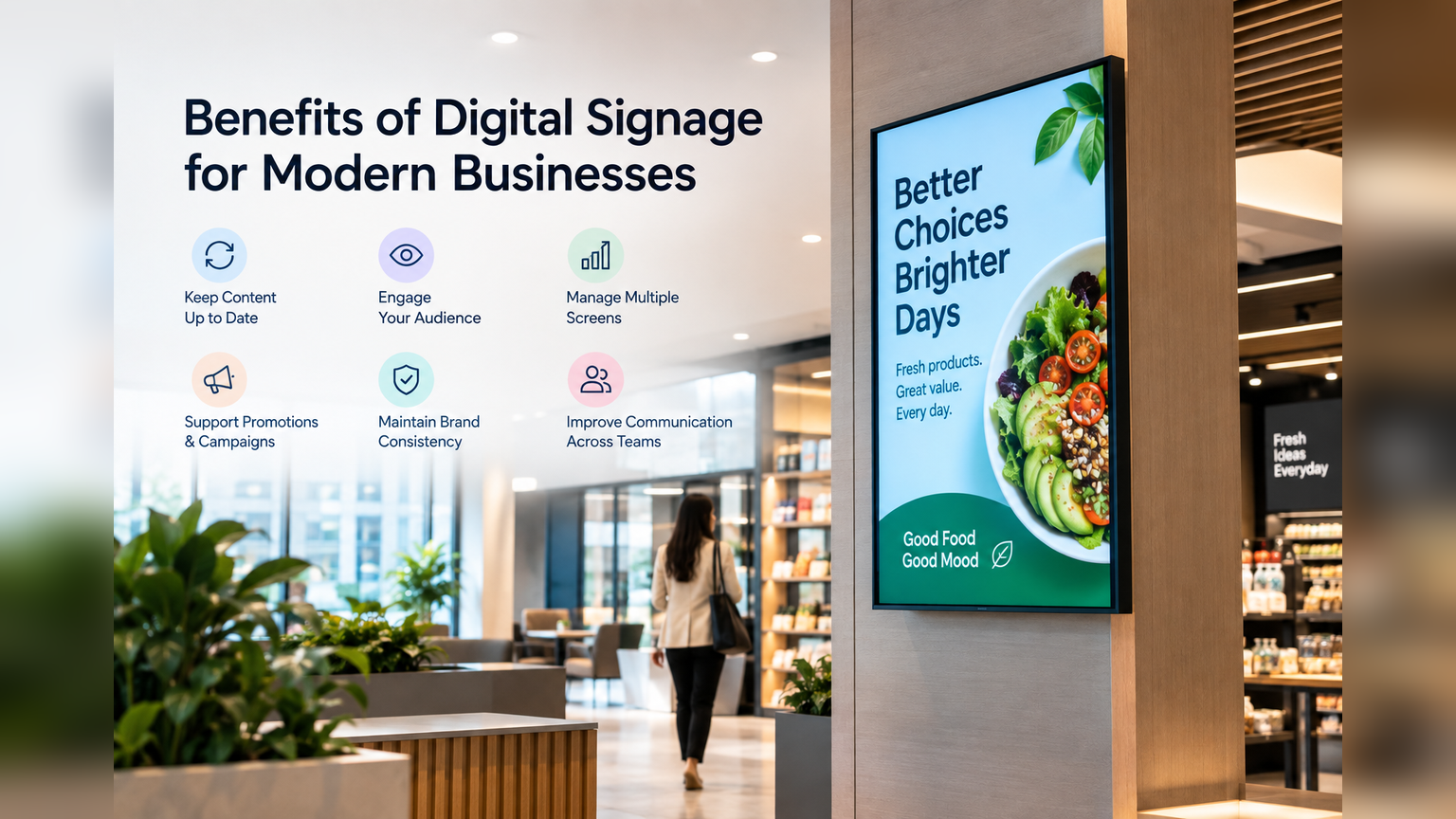
You may have seen a digital screen in a shop showing a new product. The same thing can look quite different in a restaurant, where the screen may be used for a menu, or in an office where it could show an announcement.
The screen itself is not the interesting part. What matters is that the information on it can be changed.
That is one of the main differences between digital signage and a printed sign. If a printed poster needs to be changed, a new one has to be made and put up. A digital screen can show something different without replacing the screen itself.
For some businesses, that can make everyday communication much simpler.
Keep Information Current
Business information does not always stay the same.
A restaurant may change a menu item. A store might have a new offer for the weekend. An office may need to put up a different announcement the next day.
Printed signs are not very convenient when these changes happen often. Someone has to prepare a new version, print it, and replace the old one.
With a digital screen, the content can be updated instead.
It is a small difference when there is only one change. Over time, especially for businesses that update their information regularly, it starts to matter more.
Give Products and Offers More Space
A screen can show more than a line of text.
A retail store could use one to introduce a new collection or show a product that it wants customers to notice. A restaurant might use images along with its menu. A business could also use short videos when a moving visual makes more sense.
There is no need for every screen to look the same.
One display might be used near the entrance, while another could be placed somewhere customers spend more time. The content can be planned around that particular space.
Updating Several Screens
Managing a few screens is one thing. Managing screens in different parts of a business is another.
Suppose a company has displays in several stores and wants to change the same promotion everywhere. Someone would have to make sure each location gets the new version.
That is where a digital signage platform becomes useful.
Instead of treating every screen as a separate setup, the team can manage content and assign it to particular devices or locations. If only one location needs a different message, that can be handled separately.
For businesses with multiple screens, this can save a fair amount of unnecessary back and forth.
Change Content When a Campaign Ends
A promotion has an end date.
A weekend sale should not still be on the screen the following week. The same goes for seasonal messages or short-term campaigns.
Digital signage gives businesses the option to schedule content for a particular period. Once that content is no longer needed, another message can take its place.
This is particularly handy when the business is running several campaigns throughout the year.
There is also less dependence on someone remembering to take down a printed poster.
Keep the Brand Consistent
When a business has more than one location, the screens should still feel like they belong to the same brand.
The exact message may be different, but the colours, fonts, layouts, and overall style can remain familiar.
For example, a retail business could use the same template across its stores while changing the offer or local information shown on each screen.
That gives individual locations some flexibility without making every screen look completely different.
Use Screens for Information Too
Digital signage is often associated with advertising, but a business can use its screens for plenty of other things.
A hotel may show directions or information for guests. An office might display announcements or meeting details. A restaurant can use digital menus. A retail store could show product information or help customers find different sections.
Sometimes the most useful message on a screen is not a promotion at all.
It may simply answer a question that customers or visitors would otherwise have to ask someone.
Less Time Spent Replacing Signs
There is a practical side to digital signage that is easy to overlook.
Someone still needs to create the content and decide what should appear on each screen. But there is no need to physically replace a poster every time that information changes.
When there are several displays, that difference becomes more noticeable.
The team can manage the content, devices, locations, and schedules through the digital signage system instead of handling each update as a separate physical task.
How SignageHome Fits In
SignageHome brings these parts of digital signage management together in one web portal.
Businesses can use templates and media, pair devices, organize screens by location, and schedule content. Once something is ready to display, it can be assigned to the relevant screen or location.
This can be useful for a business that has more than one display and wants to keep track of everything without managing each screen individually.
Is Digital Signage Worth Using?
It depends on what a business needs.
A small shop may mainly want an easier way to change promotions. A restaurant might need digital menus. A company with several locations may be more interested in managing all its screens from one place.
The benefit is not simply that the sign is digital.
It is the fact that the content can change when the business needs it to. A promotion can end. A menu can be updated. A new announcement can go up. A different location can show something specific to its customers.
The screen stays in place. The message does not have to.