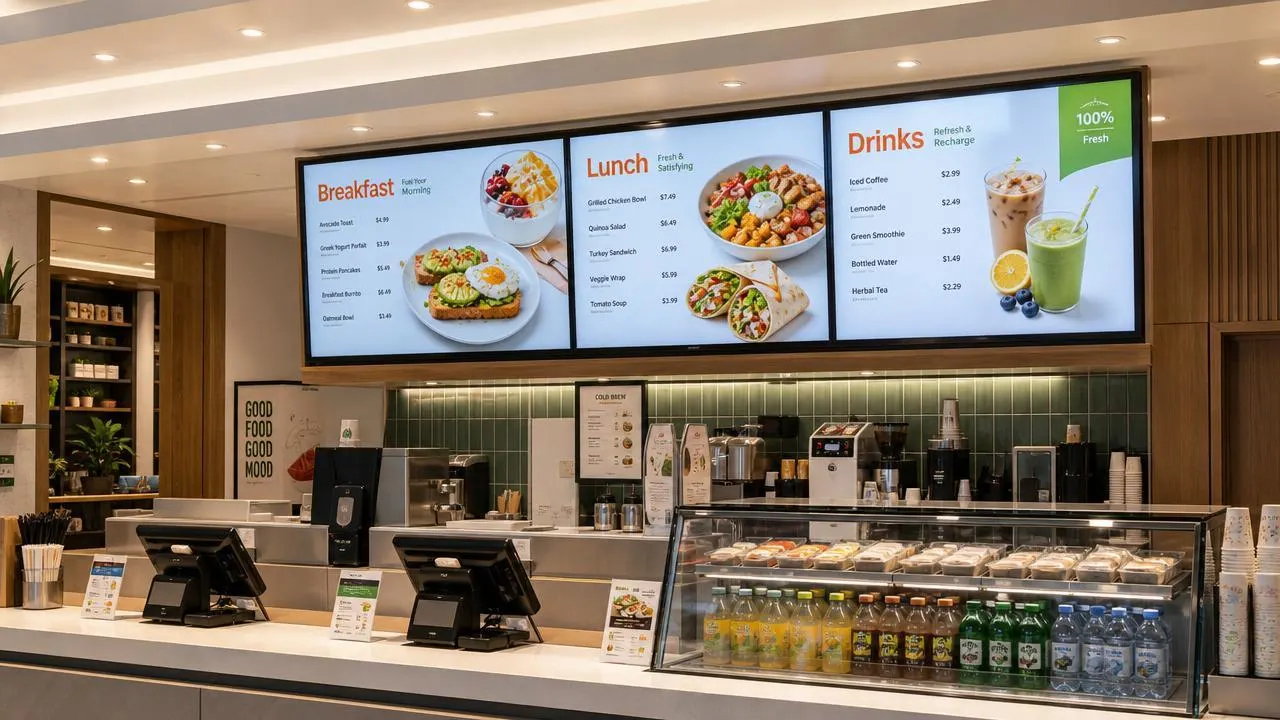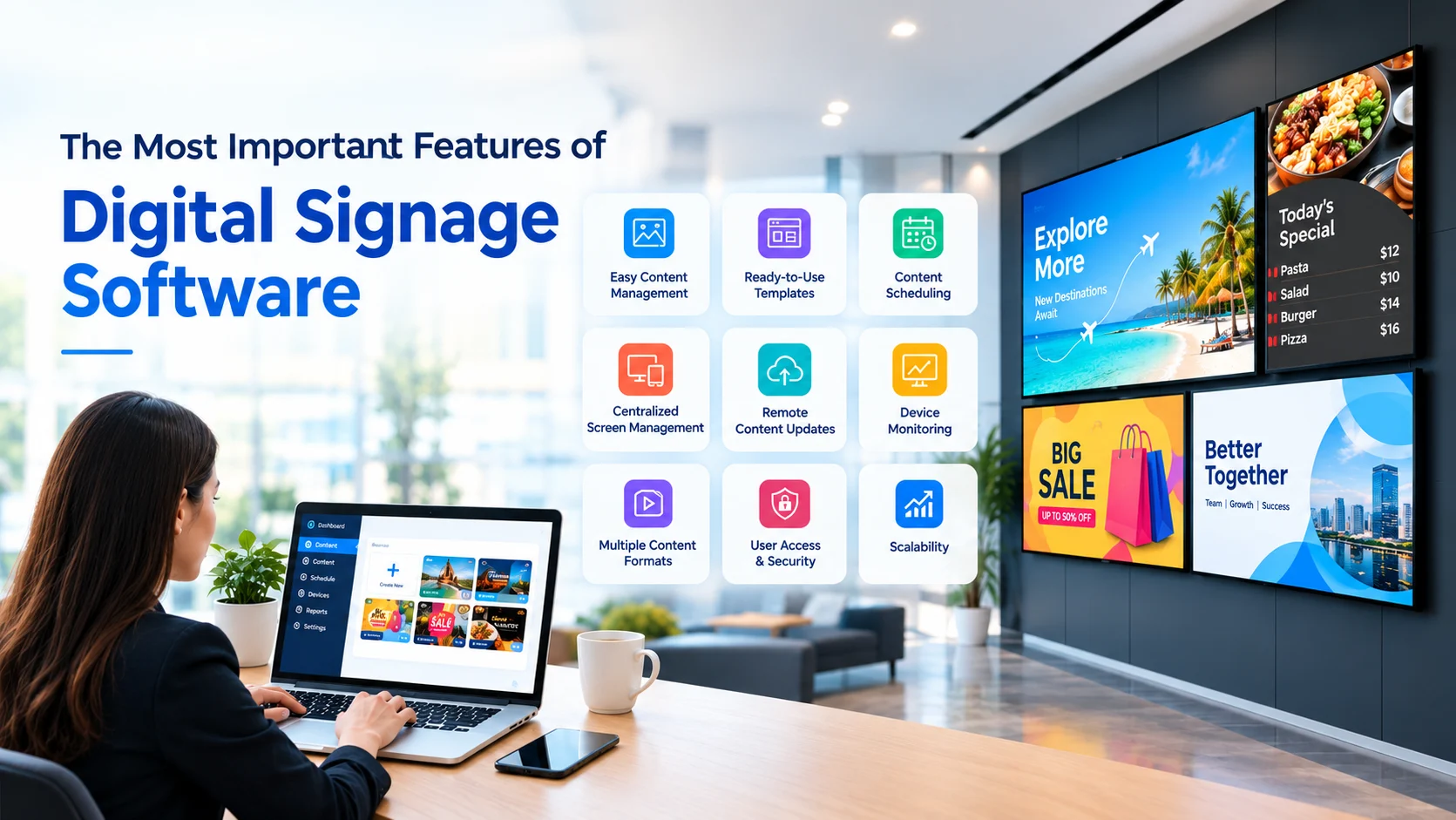
Digital signage software enables businesses to manage content displayed on TV screens and other digital devices, including promotional displays, digital menus, information boards, and retail signage. This software allows companies to organize their displays digitally and manage the content shown on their screens. When choosing digital signage software, businesses should consider their specific needs and the features available. Below are some of the most important features to look for.
1. Easy Content Management
One of the main benefits of digital displays is that businesses can update screen content whenever needed. An easy-to-use content management system allows users to add, edit, and organize content without making the process complicated. This helps businesses keep their information up to date and relevant to their audience.
2. Ready-to-Use Templates
Digital signage software often includes ready-made templates that make it easier to create attractive displays. These templates can be used for retail promotions, restaurant menus, business announcements, and other types of content. They also help businesses create consistent designs without building every layout from scratch.
Businesses can explore Signage Home to learn more about digital signage and its uses for different business needs.
3. Content Scheduling
Scheduling allows businesses to display different content at specific times of the day. For example, a restaurant can show its breakfast menu in the morning, followed by lunch and dinner menus later in the day. The available scheduling options depend on the selected software.
4. Centralized Screen Management
For organizations operating across multiple locations, screen management can be especially important. It allows employees to organize displays according to their location or purpose and manage content across different screens.
With centralized management, business owners and marketing teams can make content changes remotely instead of visiting every location. Choosing suitable digital signage solutions can help businesses explore ways to organize screen content and manage digital displays more efficiently.
5. Remote Content Updates
Remote updates allow users to change display content without visiting the location or interacting directly with the screen. This feature is useful when a business needs to publish a new promotion, update important information, or replace outdated content quickly.
6. Device Monitoring
Device monitoring helps businesses check the status of connected screens and identify possible connectivity or playback issues. Depending on the software and supported devices, users may be able to check whether screens are online and whether content has been updated successfully.
7. Support for Multiple Content Formats
Digital signage content can include images, videos, text, and other visual elements. Choosing software that supports the formats a business needs makes it easier to create displays for different purposes and audiences. Before selecting a platform, businesses should check that it supports their preferred content types.
8. User Access and Security
Businesses should consider who can access the content management system and control connected displays. User permissions help ensure that only authorized people can edit content, change schedules, or manage devices. Secure login and device connection processes are also important when managing multiple screens.
9. Scalability
As a business grows, it may need to manage more screens and locations. Digital signage software should be flexible enough to support these changing requirements. Businesses should consider whether the platform can accommodate additional displays and whether its available support and update options meet their long-term needs.
Choosing the Most Suitable Digital Signage Software
The features mentioned above can help businesses choose software that meets their requirements. Before selecting a platform, it is important to check whether it is easy to use, compatible with the intended devices, and flexible enough for everyday operations.
Businesses should also consider scheduling options, content management tools, security, and the ability to expand as their needs change. Comparing these features in advance can help them make a more informed decision.
Conclusion
The right digital signage software can make it easier to organize, manage, and update content across digital displays. Features such as templates, content scheduling, centralized screen management, remote updates, device monitoring, and user permissions can support everyday business communication. The most suitable option will depend on a company's needs, devices, and plans for future growth.