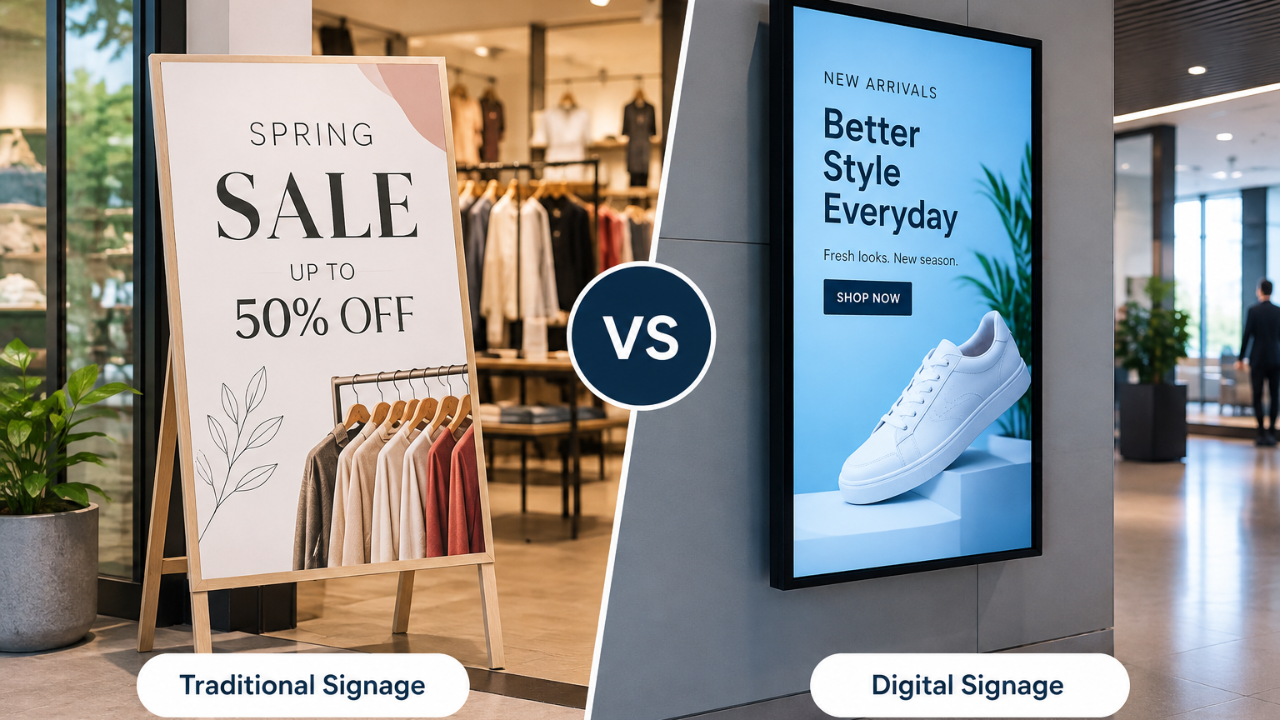
Digital Signage vs Traditional Signage
Walk into a shop and you might see a poster announcing a sale. Visit a restaurant and you may find its menu printed on a board near the counter. These signs are familiar, and for many businesses, they still do the job.
But things get a little different when the information needs to change often. A restaurant may update its menu, a shop may launch a new offer, or a hotel may need to share details about an event. Replacing printed signs every time can become another task for the team.
This is one reason businesses consider digital signage. Both options help share information, but they work differently.
What Is Traditional Signage?
Traditional signage is what most of us already know: printed posters, banners, menu boards, window displays, and signs placed around a business.
A clothing store might put a sale poster in its window. A café could print its menu and display it above the counter. Once these signs are in place, they need very little attention unless they get damaged or the information changes.
That is where printed signage works well. If a sign shows the store name, opening hours, or directions, it may stay useful for months or even years.
The work usually starts when something needs to be changed. A new price or promotion may mean preparing another design, printing it, and replacing the old sign.
What Is Digital Signage?
Digital signage uses screens to display information such as menus, images, videos, offers, and announcements.
For example, a café could use a screen to show its menu and highlight a seasonal drink. When the promotion ends, the content can be changed without printing another poster.
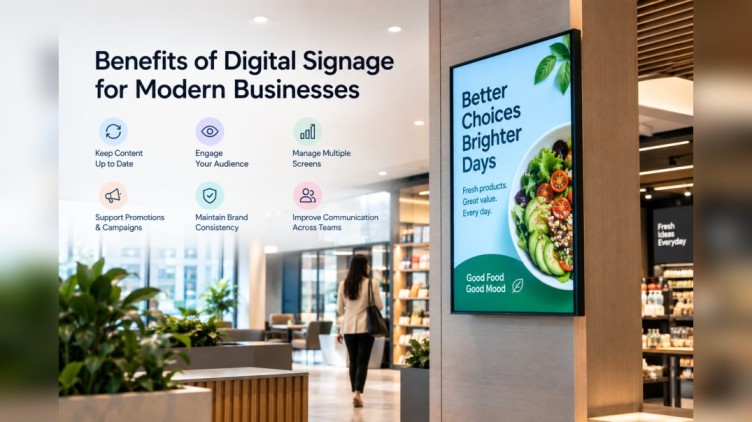
Digital signage software helps businesses manage what appears on their screens. Depending on the system, teams may also be able to schedule content or manage several displays from one place.
Of course, screens need equipment and setup. A business has to consider those requirements before deciding whether digital signage is the right fit.
What Happens When Information Changes?
This is where the difference becomes easier to understand.
Imagine a restaurant changes the price of a meal combo. If the price is printed on a menu board, the restaurant may need to replace the printed material. If the menu is displayed digitally, the team can update the price through its signage system.
The same situation comes up in retail. A shop running a weekend sale can change the promotion when the offer ends instead of putting up a new poster each time.
For signs that rarely change, printing may be the simpler option. When updates happen regularly, digital screens can save the team some of that repeated work.
Which Is Better for Shops and Restaurants?
There is no single answer because different businesses have different needs.
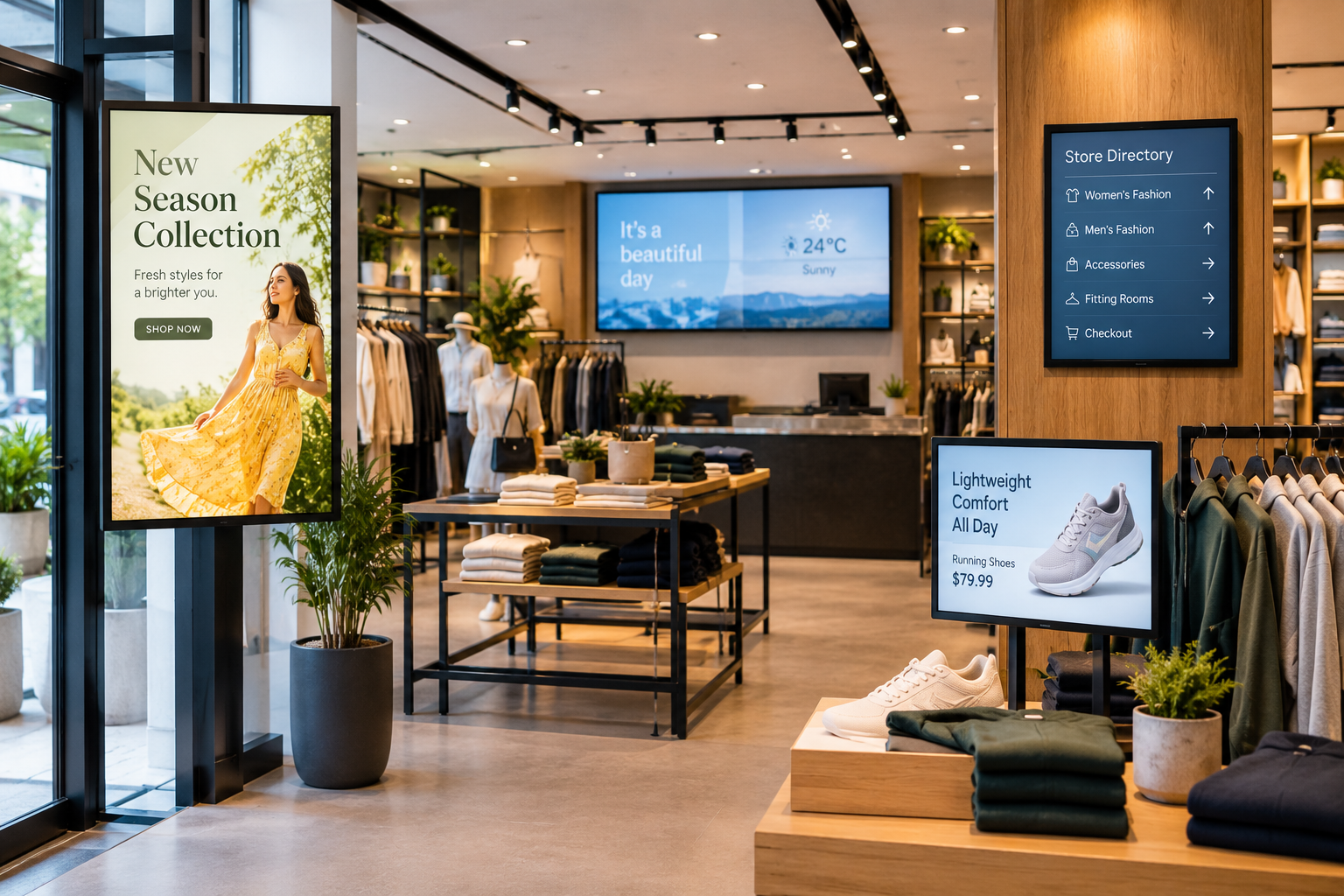
A clothing store may use printed signs for directions and store policies, while digital screens show new arrivals or current offers. The permanent signs stay where they are, and the screen can be used for changing promotions.
Restaurants face a similar choice. A small café with a menu that hardly changes may be perfectly happy with a printed board. A restaurant that regularly introduces dishes, changes prices, or runs meal deals may find a digital menu more convenient.
The important thing is to look at what needs to be displayed and how often it changes.
Does Digital Signage Cost Less?
Not always. The cost depends on how a business uses its signs.
Printed signage can be affordable when only a few signs are needed and the information stays the same. But if menus and offers need regular replacement, printing costs and the time spent updating them can add up.
Digital signage involves a different set of expenses. Businesses need compatible screens and equipment, and there may be software, electricity, installation, and maintenance costs.
So, switching to digital signage does not automatically mean saving money. A business should compare the setup cost with the ongoing work and expense of updating its current signs.
What If a Business Has Several Locations?
Managing signs becomes more complicated when a business has branches in different places.
Suppose a restaurant chain launches a new menu across ten locations. The team needs to make sure every branch gets the correct menu, while some locations may still have their own special dishes or offers.
With printed signage, the updated materials need to reach each location and be put in place. A digital signage platform can help the team manage content centrally and assign it to the relevant screens.
This can make updates easier to coordinate, although each location still needs suitable equipment and someone to manage the content.
Can Businesses Use Both?
Yes, and in many cases that makes more sense than replacing every printed sign.
A restaurant could keep a printed sign showing its opening hours and use a digital screen for menus and daily specials. A shop might use permanent boards for directions and screens for seasonal promotions.
Some information stays the same for a long time. Other information changes every few days. Choosing different formats for these different needs can be a practical approach.
How SignageHome Fits In
SignageHome helps businesses manage their digital screen content from one place.
Teams can add images and videos, use templates, connect compatible devices, and schedule content for different screens. For businesses with several displays, this gives them a central place to organise what appears on each screen.
Final Thoughts
Traditional signage remains a sensible choice for signs that do not need frequent changes. Digital signage can be more convenient when a business regularly updates menus, promotes offers, or manages screens across several locations.
Before choosing, think about how often the information changes, how many signs are needed, and what the ongoing costs will be.
A small business may only need printed signs. Another may benefit from digital screens, while some will find that a mix of both works best. The right choice depends on what the business actually needs, not simply which option is newer.